
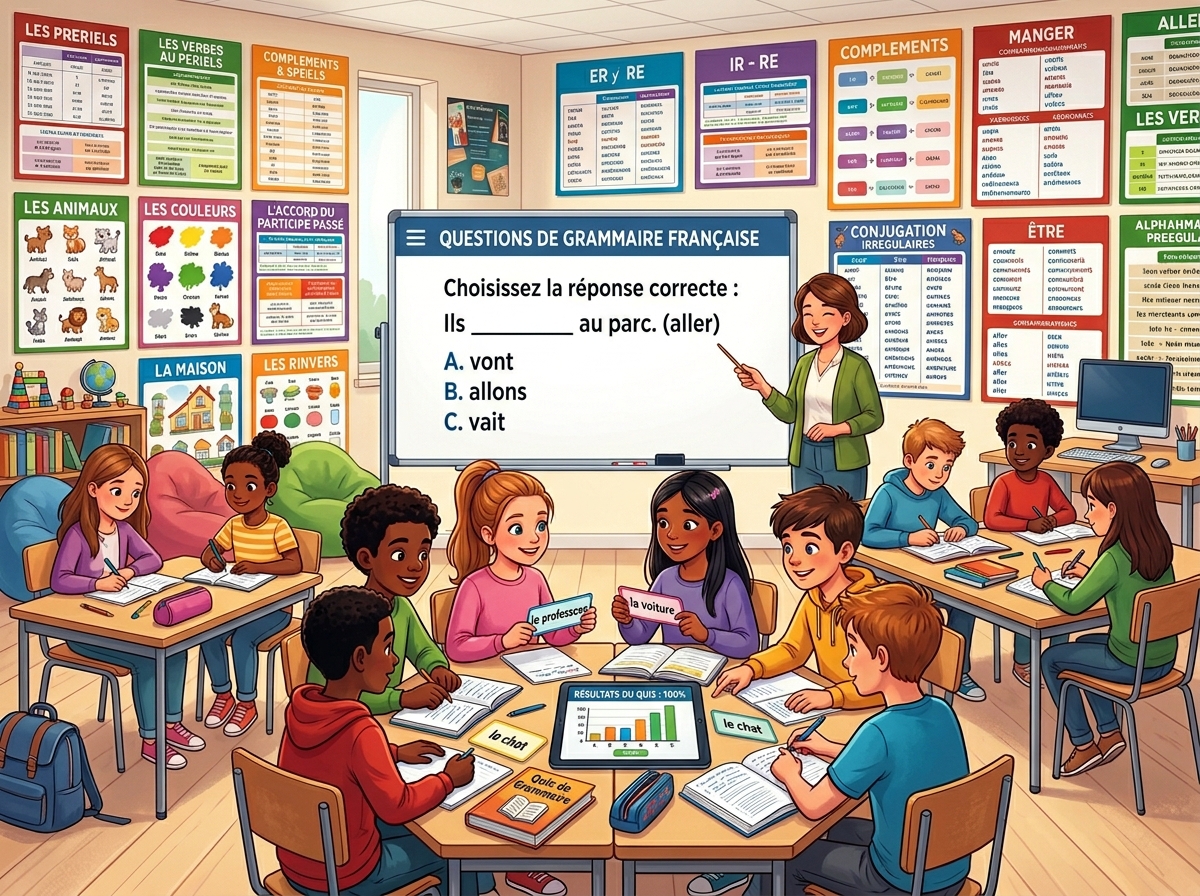
French Grammar Quiz: Test Your Knowledge of Essential French Grammar Rules
French grammar forms the foundation of the French language. Whether you are a beginner learning your first French words or an advanced student refining your skills, understanding grammar is essential for speaking, reading, writing, and listening effectively. This French grammar quiz is designed to help learners test their knowledge while reinforcing key grammatical concepts used every day in French communication.

French grammar includes articles, nouns, adjectives, pronouns, verb conjugations, sentence structure, agreement rules, and tenses. While some learners initially find French grammar challenging, understanding its logic makes learning much easier and more rewarding.
Why French Grammar Matters
Grammar provides the rules that allow us to communicate clearly. Without grammar, sentences become confusing and difficult to understand. In French, grammar determines how words change according to gender, number, tense, and context.
For example:
- Le garçon joue.
- Les garçons jouent.
A small change in number requires changes in both the noun and the verb. These patterns help listeners and readers understand meaning accurately.
French grammar is important because it helps learners:
- Build correct sentences
- Improve speaking confidence
- Understand written texts
- Avoid common mistakes
- Communicate naturally
Learn more about French grammar:
https://www.lawlessfrench.com/grammar/
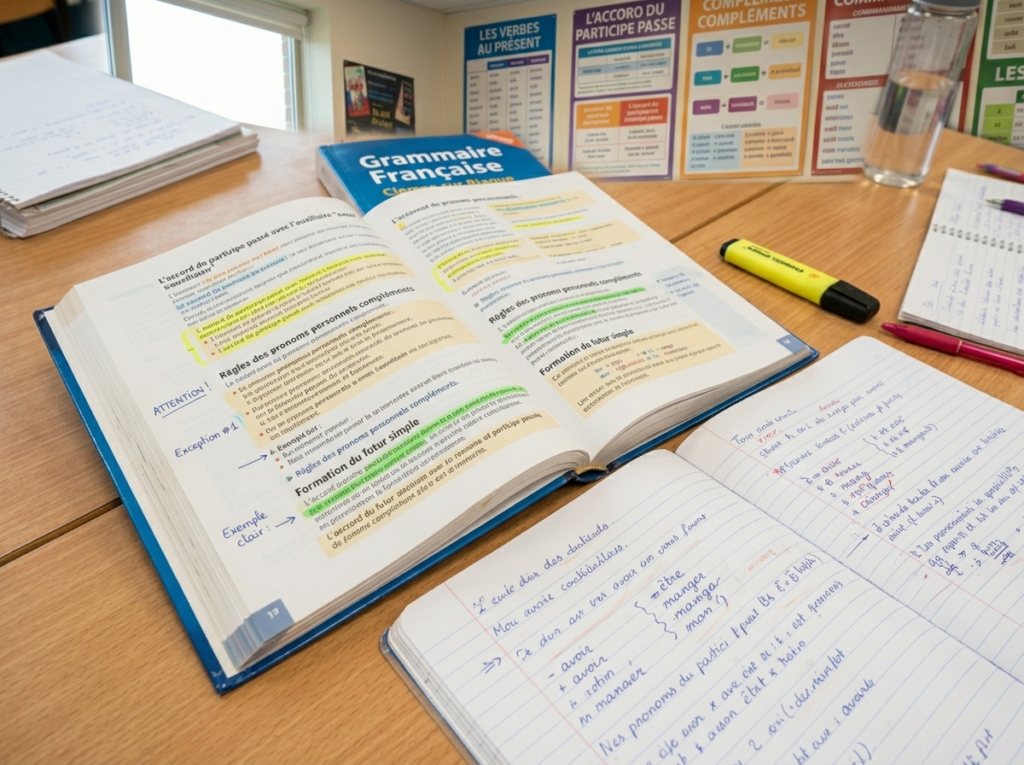
French Articles: Le, La, Les, Un, Une
Articles are among the first grammar concepts French learners encounter. Every noun generally has an article.
Definite articles:
- Le (masculine singular)
- La (feminine singular)
- Les (plural)
Examples:
- Le livre
- La maison
- Les enfants
Indefinite articles:
- Un
- Une
- Des
Examples:
- Un chien
- Une fleur
- Des arbres
Unlike English, French articles are used more frequently and are essential for grammatical correctness.
Understanding Gender in French
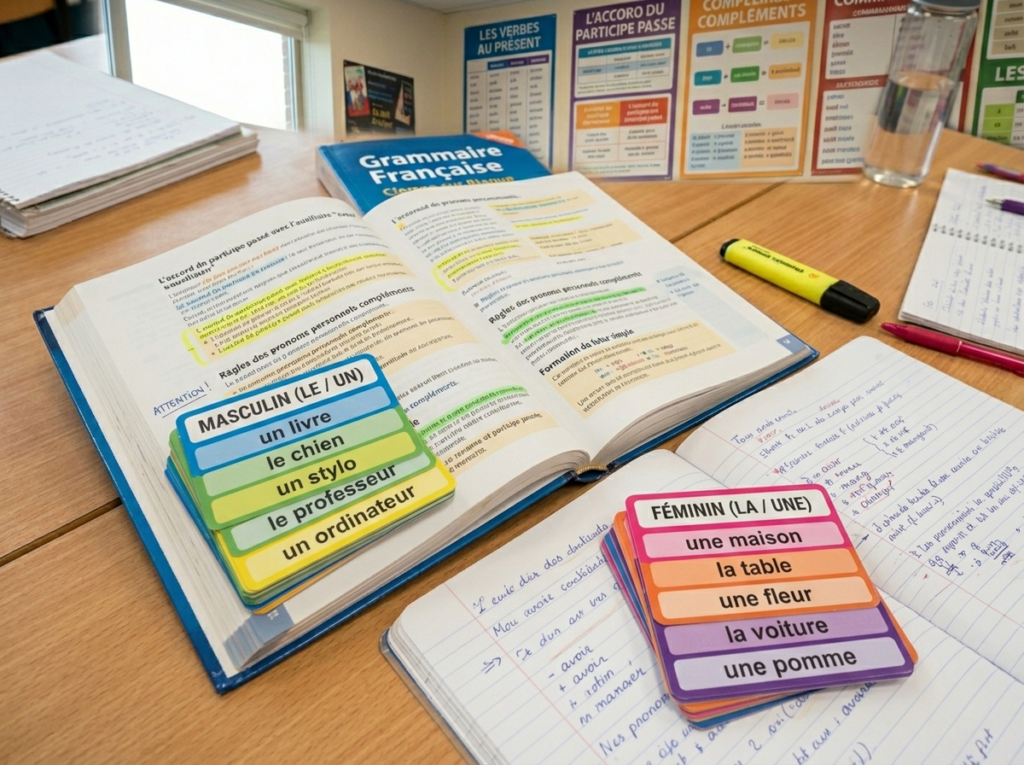
One of the most distinctive features of French grammar is grammatical gender. Every noun is either masculine or feminine.
Examples:
Masculine:
- Le livre
- Le garçon
- Le jardin
Feminine:
- La maison
- La voiture
- La pomme
Gender affects articles, adjectives, pronouns, and other parts of speech. Learning nouns together with their articles helps students remember gender more effectively.
A common strategy is to memorize nouns as complete units:
- la table
- le cahier
- la porte
instead of learning only the noun.
Adjective Agreement in French
French adjectives must agree with the nouns they describe.
Examples:
Masculine singular:
- Un garçon intelligent
Feminine singular:
- Une fille intelligente
Masculine plural:
- Des garçons intelligents
Feminine plural:
- Des filles intelligentes
These agreement rules are fundamental in French writing and speaking. Mastering adjective agreement significantly improves grammatical accuracy.
Learn more:
https://www.bbc.co.uk/bitesize/guides/zq6j6sg/revision/1
Personal Pronouns
Personal pronouns replace nouns and make communication more efficient.
Common French subject pronouns:
- Je
- Tu
- Il
- Elle
- Nous
- Vous
- Ils
- Elles
Examples:
- Marie est gentille → Elle est gentille.
- Paul joue → Il joue.
Pronouns are essential because they work directly with verb conjugations. Understanding pronouns helps learners form complete sentences more naturally.
The Importance of Verb Conjugation
French verbs change according to the subject performing the action.
Example with être:
- Je suis
- Tu es
- Il est
- Nous sommes
- Vous êtes
- Ils sont
Example with avoir:
- J’ai
- Tu as
- Il a
- Nous avons
- Vous avez
- Ils ont
Verb conjugation is one of the most important aspects of French grammar because verbs appear in nearly every sentence.
Many students focus heavily on mastering être and avoir because these verbs are used constantly and serve as auxiliary verbs in compound tenses.
[image prompt: French conjugation table showing être and avoir with clear educational design]
Singular and Plural Forms
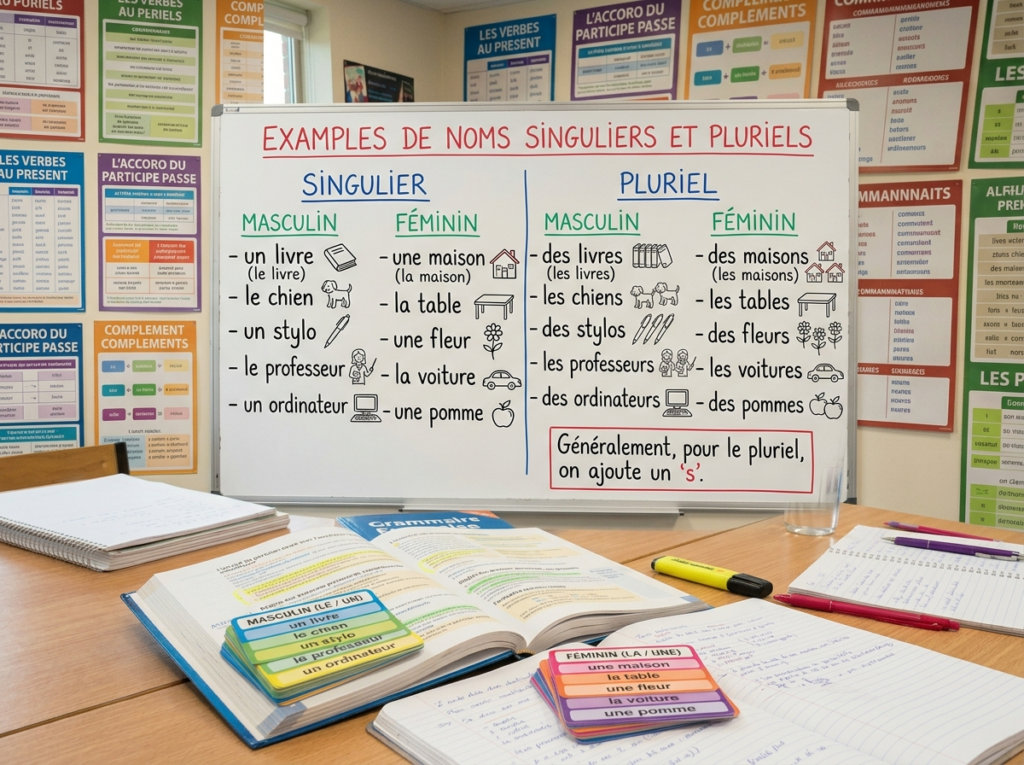
French nouns generally become plural by adding “s”.
Examples:
- Le chat → Les chats
- La voiture → Les voitures
However, pronunciation often remains unchanged. This can make French spelling challenging because learners must remember written agreement even when it is not always heard.
Plural agreement also affects:
- Articles
- Adjectives
- Some pronouns
- Certain verb forms
Understanding plural formation helps students read and write more accurately.
Present Tense in French
The present tense is used to describe:
- Current actions
- Habits
- General truths
Examples:
- Je mange une pomme.
- Nous étudions le français.
- Ils jouent au football.
The present tense is one of the most frequently used tenses in everyday conversation. Mastering it provides a strong foundation for learning more advanced tenses later.
Learn more:
https://www.lawlessfrench.com/grammar/present-tense/
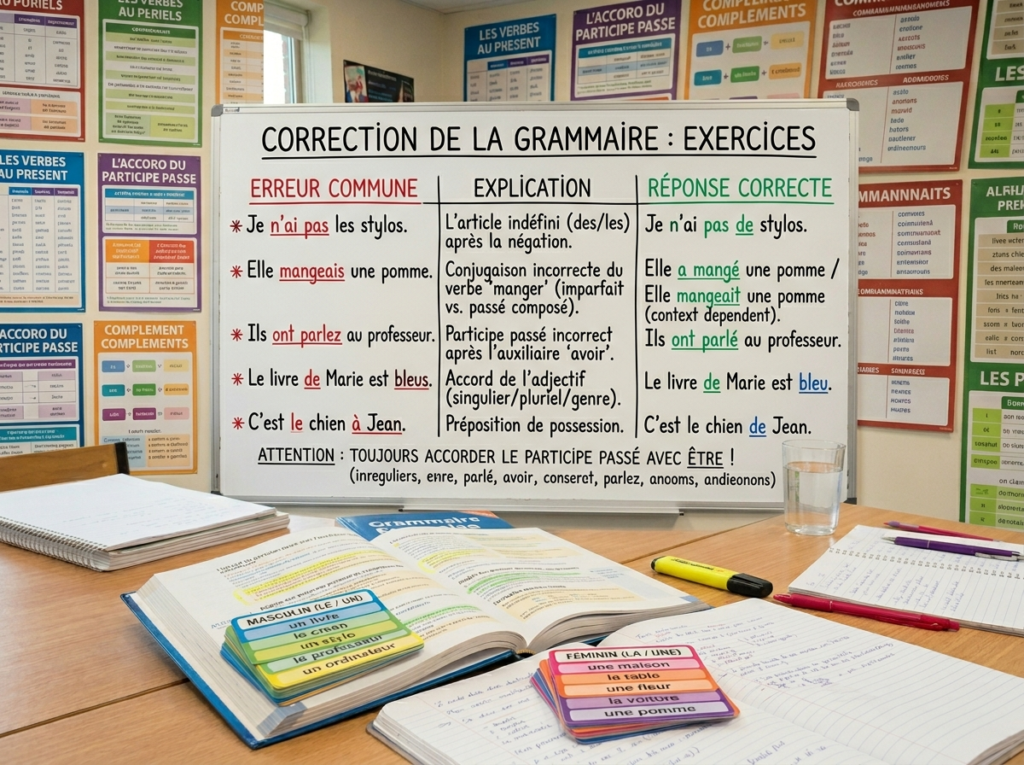
Common French Grammar Mistakes
Many learners make similar mistakes:
Incorrect:
- Je suis faim.
Correct:
- J’ai faim.
Incorrect:
- La voiture rougees.
Correct:
- La voiture rouge.
Incorrect:
- Les garçon joue.
Correct:
- Les garçons jouent.
Recognizing common errors helps students avoid repeating them and accelerates learning progress.
How to Improve French Grammar Quickly
Improving grammar requires regular practice.
Effective methods include:
- Taking quizzes
- Reading French books
- Writing short paragraphs
- Reviewing conjugation tables
- Listening to native speakers
- Practicing daily
Short but consistent study sessions often produce better results than occasional long study sessions.
Using quizzes is particularly effective because they provide immediate feedback and reinforce correct grammatical structures.
Conclusion
French grammar may seem complex at first, but it follows clear patterns that become easier with practice. Understanding articles, gender, adjective agreement, pronouns, plurals, and verb conjugations allows learners to communicate accurately and confidently. This French grammar quiz provides an engaging way to test your skills while reinforcing essential rules used in everyday French.
The more you practice grammar through reading, writing, speaking, and quizzes, the more natural French becomes. Consistent exposure and regular review are the keys to long-term success in mastering the language.